Equipment Hubs
UX Research, Systems Design, App Prototype
The Problem
College students want to play pickup sports to unwind, but three things stop them: there's no equipment at the court, there's no one there to play with, and if you're a beginner, showing up alone feels intimidating. These remove the aspects of spontaneity and fun from pickup sport.
Key Insights
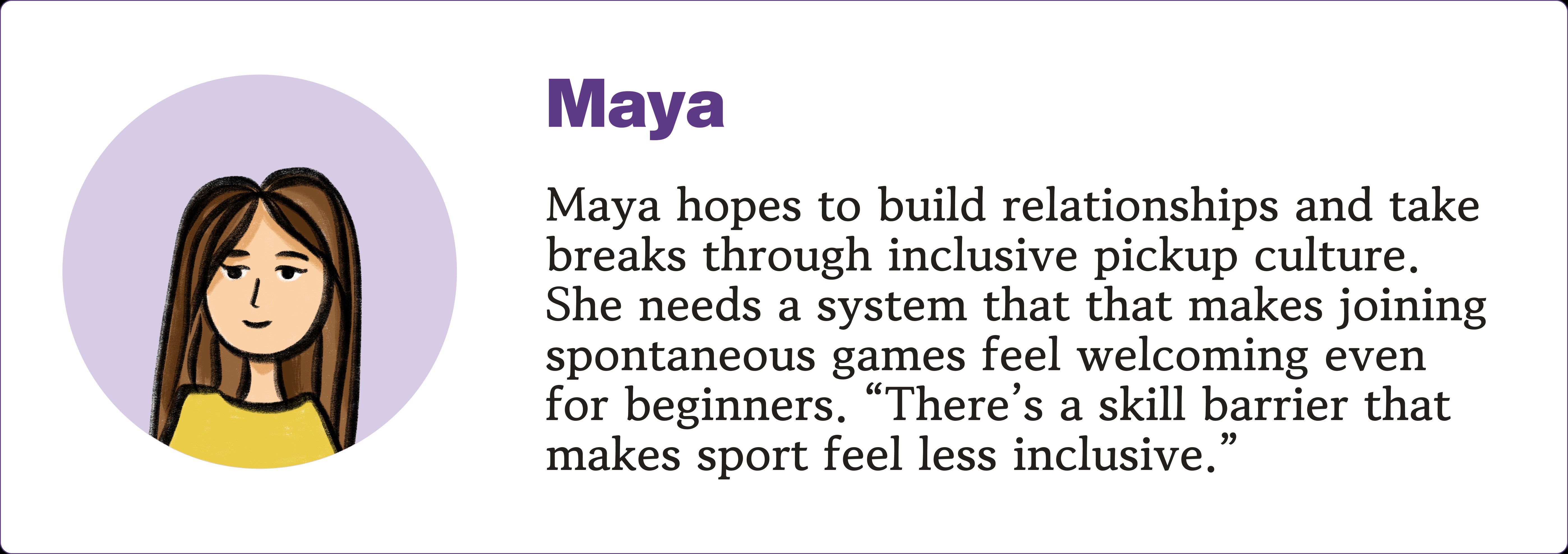
My team and I interviewed students, the Rec Center equipment manager, and the Farm Games coordinator and found a consistent pattern: students are far more likely to show up if they can trust that equipment will be there and that they won't be playing alone.

Ideation and Prototyping
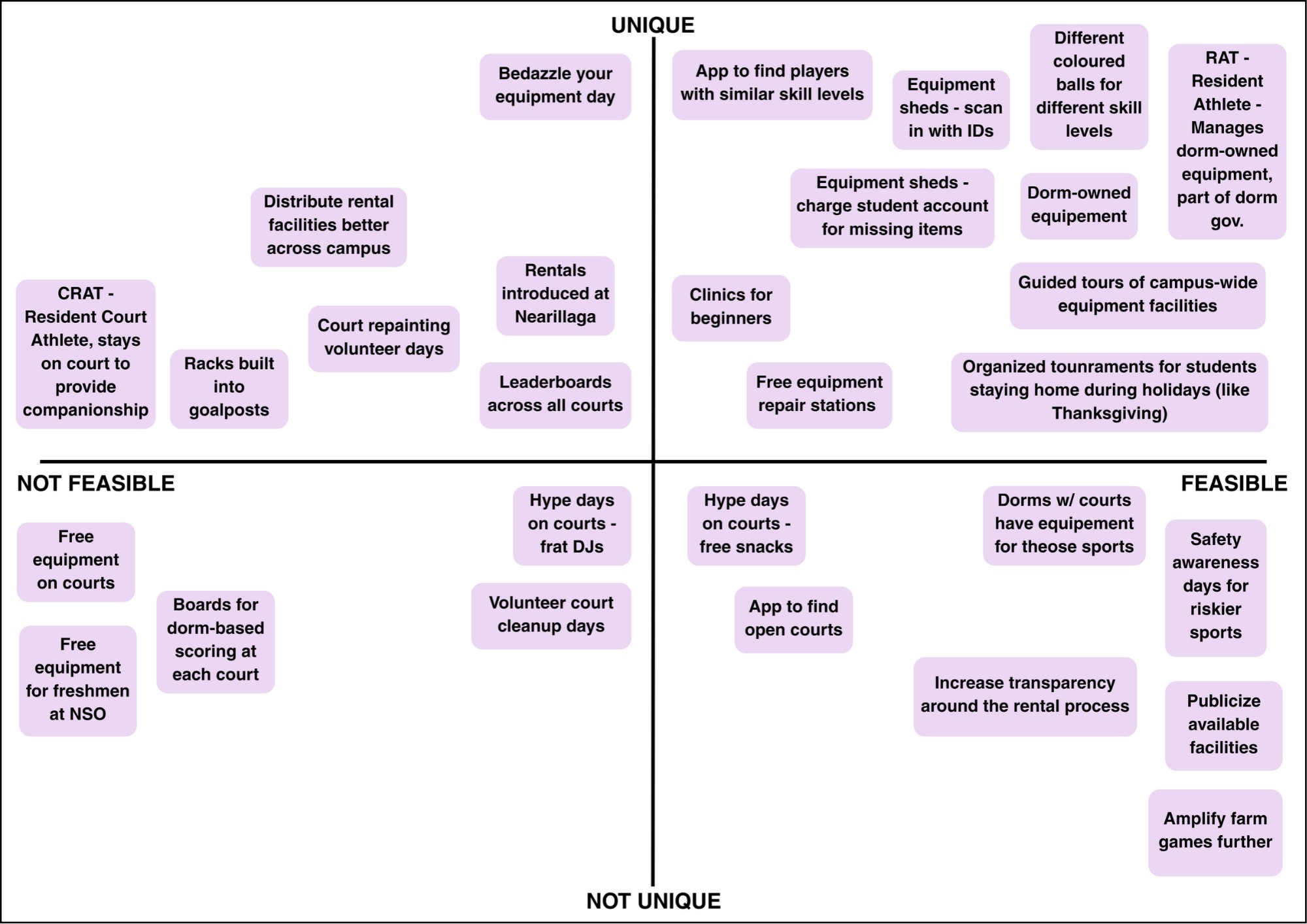
We mapped dozens of ideas on a matrix of uniqueness versus feasibility, and looked for the one that removed the most barriers at once. Equipment Hubs came out on top because they solved gear access and built community in the same solution.
Three directions we explored:
- Equipment Sheds: On-site boxes at courts where students borrow gear by scanning their student ID, so anyone can play spontaneously without paying for equipment.
- Resident Athlete (RAT): A new dorm government position that runs a dorm's equipment checkout and maintenance, and acts as a liaison between residents and RAs and staff.
- Skill-Based Ball Sorting: Balls color-coded by skill level, so players can join groups at their level just by seeing which ball is in use.
Design Principles
We also decided on our guiding design principles, which ultimately led us to our final solution.
- Accessibility: We hope to make access to equipment and play effortless for every student, within minutes.
- Community: We hope to strengthen campus community via a stronger casual sporting culture.
- Empathy: We want to remain inclusive to students with varying skill levels and varying social groups.
- Joy: We want to infuse joy into the experience by removing various stressors.
Prototype Development
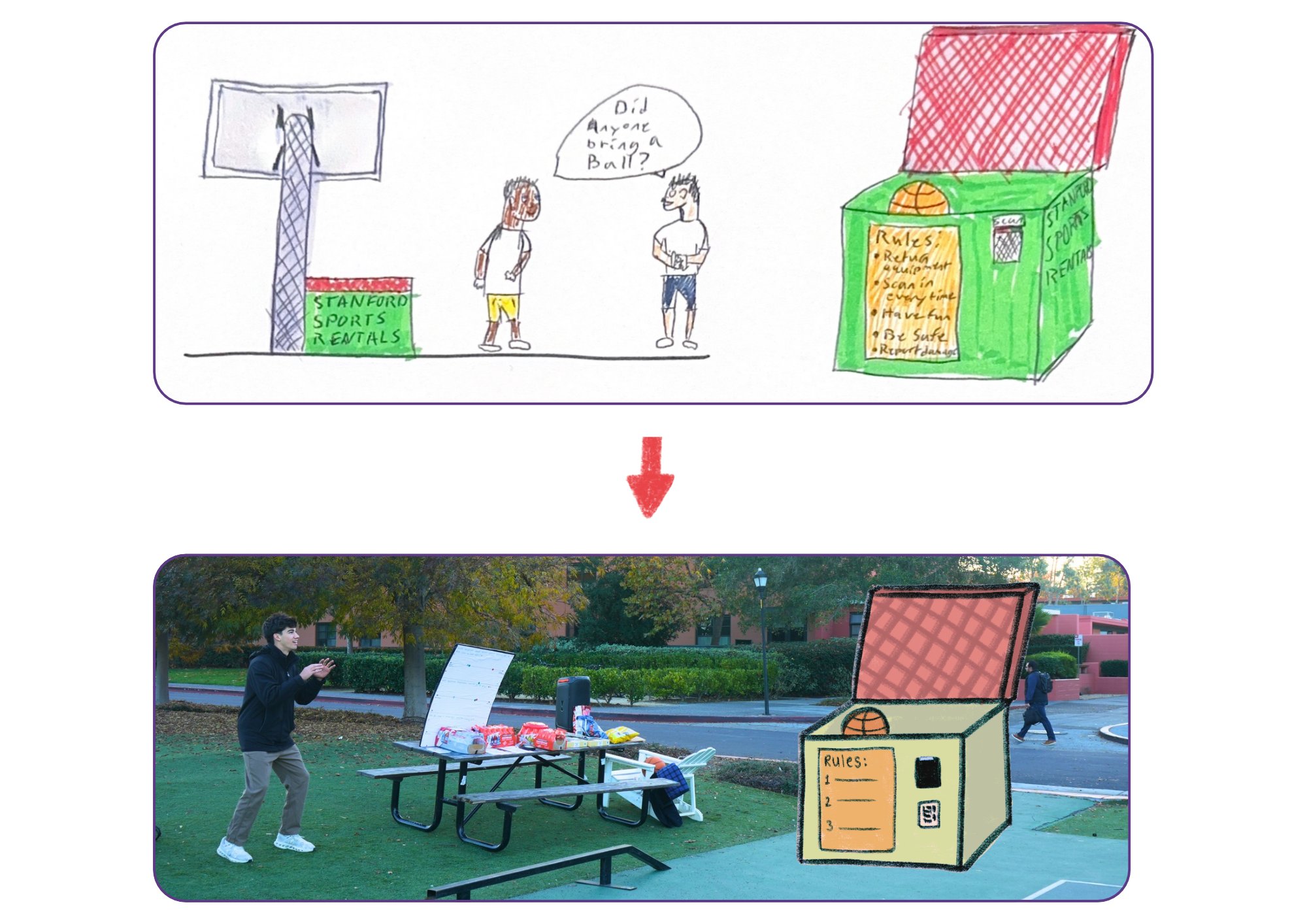
Our first idea was implementing "equipment sheds" across campus at the major outdoor sports facilities, which would mainly focus on making it easy to acquire equipment to play pickup. These would allow Stanford students to borrow equipment for brief periods by scanning in their student IDs at the courts.
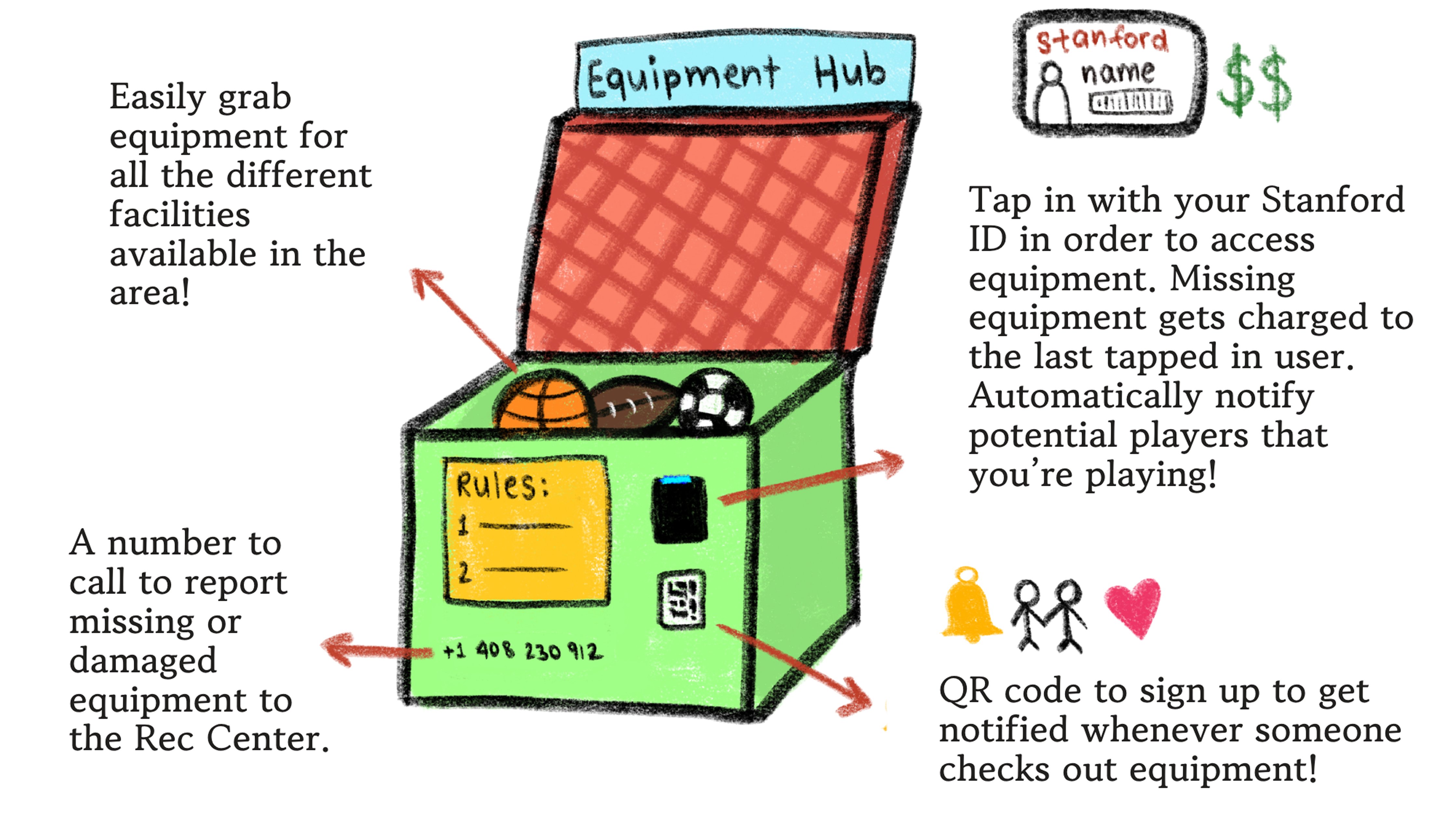
However, we further realized the need for a solution to the problem of not having anyone to play the sport with. Thus, we decided to expand our shed idea to an 'Equipment Hub' which serves as a centralized location on each sports field which allows a student to borrow equipment as before, but also prompts them to notify other students that they are currently playing at that court. There would be QR codes at the equipment boxes that enable students to sign up for notifications for that court.
Concept
Equipment Hubs are physical stations at every major outdoor court on campus, stocked with sports equipment that any student can access by tapping their Stanford ID. Hubs automatically notify nearby students that someone's playing at that court. You scan a QR code once to subscribe to a court, and from then on, you get a ping every time someone shows up.
I also designed a companion iOS app that gives you the full picture before you even leave your dorm: which courts have players right now, what equipment is available, and a live activity feed of who's checking out what.
Design Decisions
- The app's home screen shows live player counts with a pulse indicator for active courts.
- Court subscriptions replace group chat coordination. You tap once to follow a court. After that, every equipment checkout there sends you a notification.
- NFC checkout with student ID keeps the physical interaction to a single tap without an app download or account creation.
Outcome
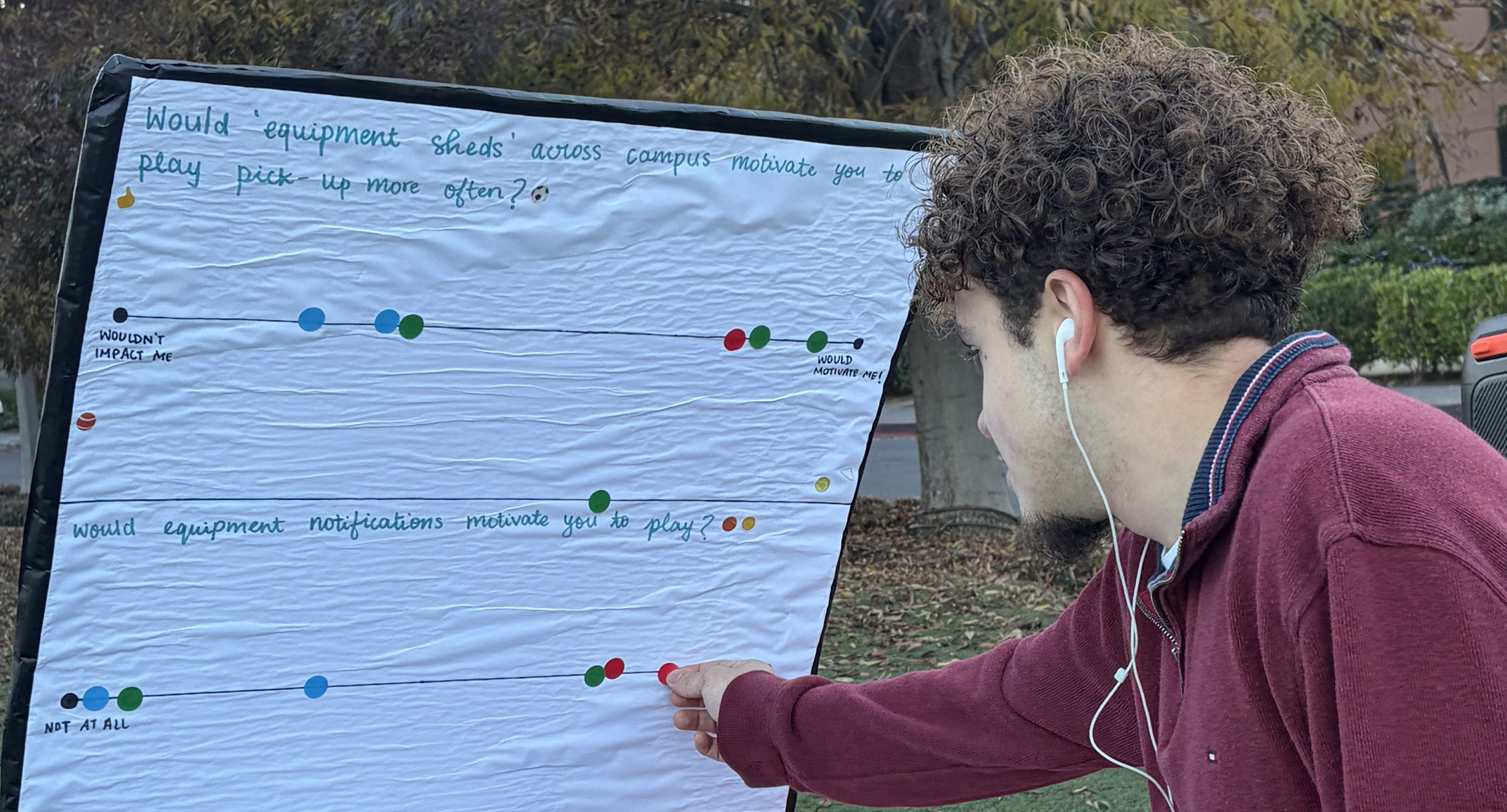
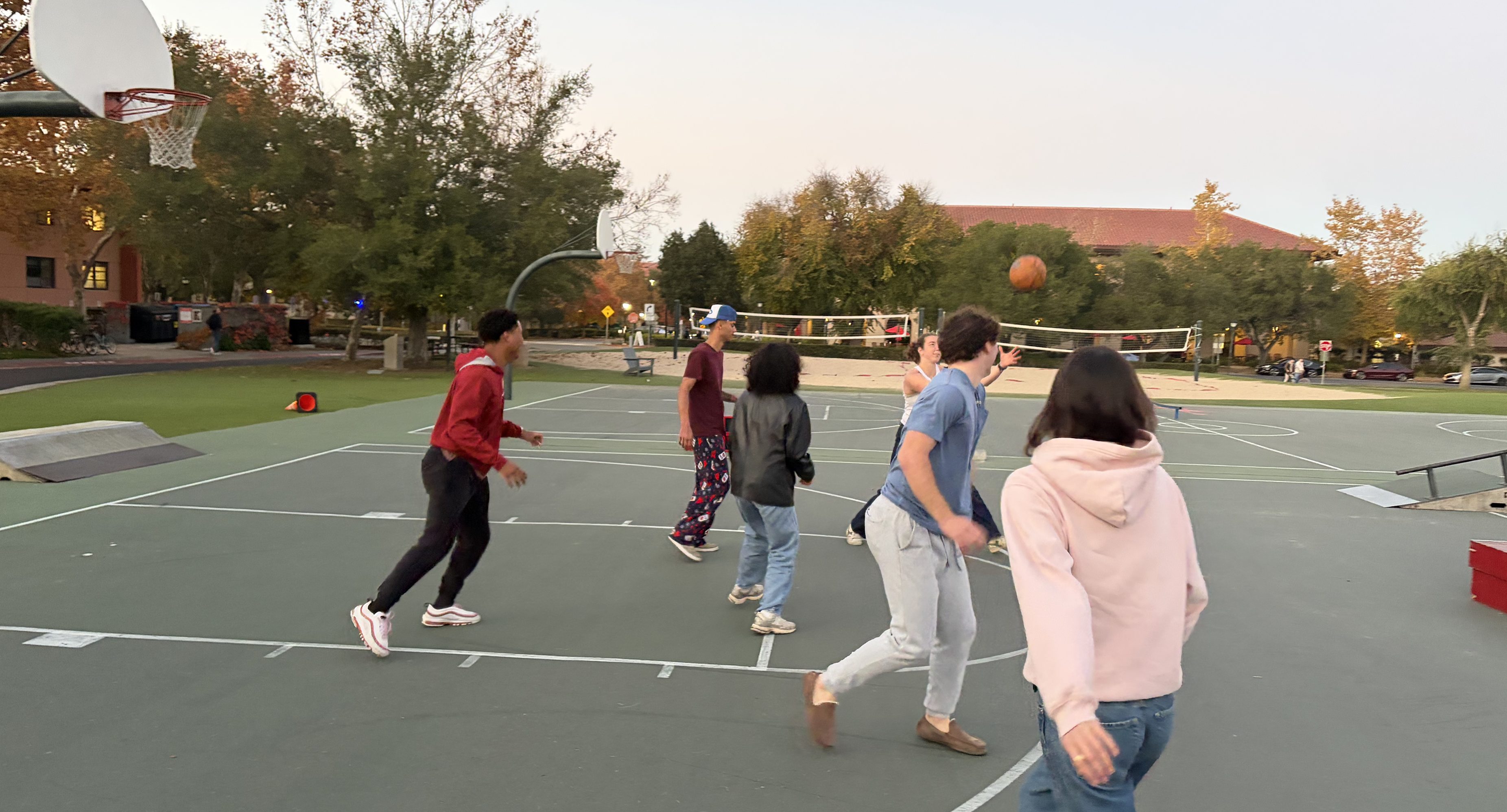
We ran a live "Sports Day" at the outdoor courts outside Arrillaga Dining. We set up QR codes for court notifications and a sticker-based feedback board. 40 students participated.
Beginners played alongside more experienced students without the usual intimidation. The notification sign-up had the strongest response as students were genuinely excited about getting pinged when someone was at their nearest court.