
High Fidelity Prototype: iOS App
The Problem
Stanford students buy expensive clothes for one-off occasions (formals, themed parties, career fairs, and more) then never wear them again. Meanwhile, borrowing between friends happens constantly but runs entirely on awkward DMs and forgotten returns.
Key Insights
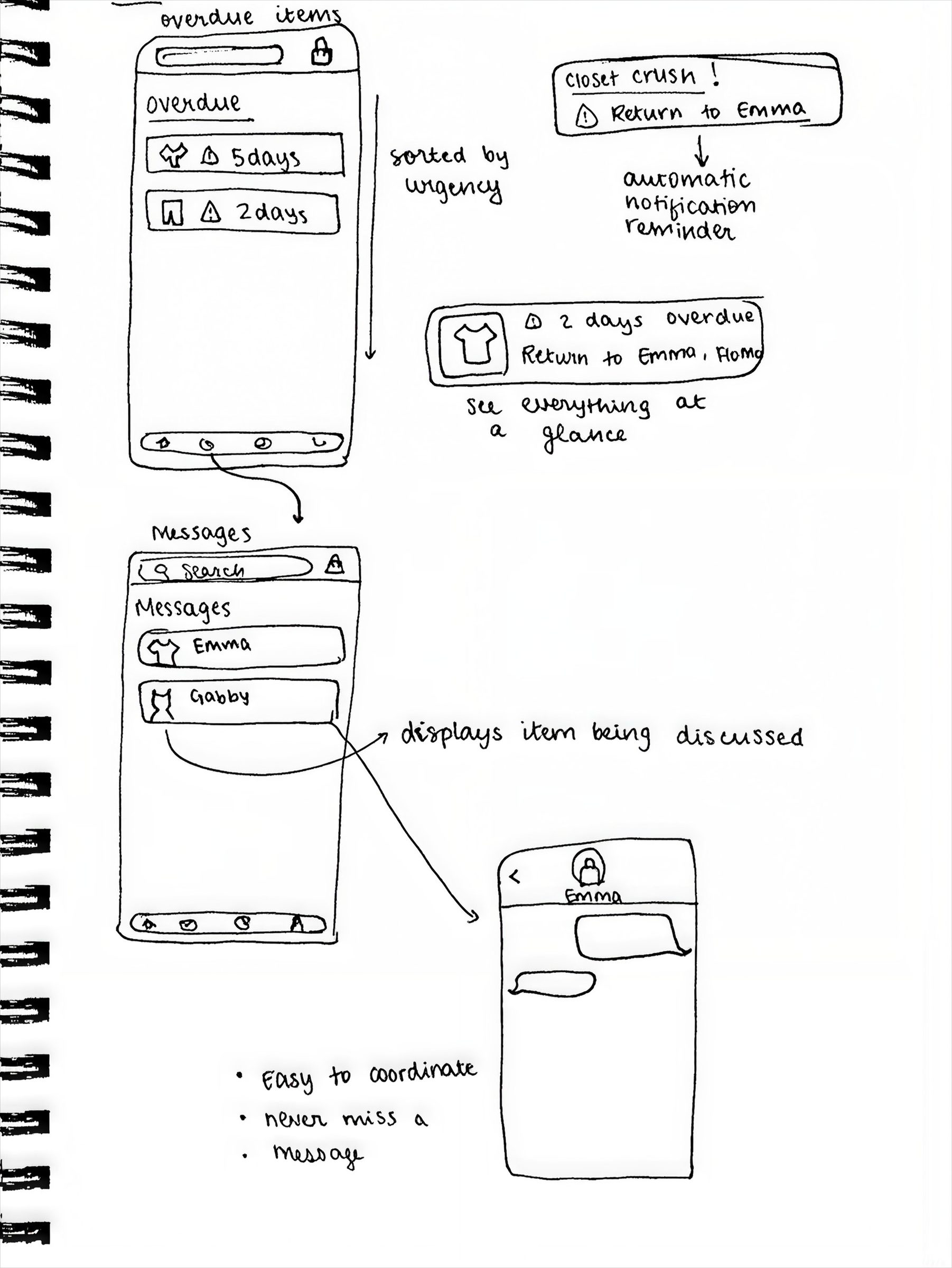
Students need three things to actually borrow instead of buy: visibility into what friends have available without asking every time, a way to coordinate the hand-off without a chain of texts, and a system for returns that doesn't rely on awkward reminders.
Concept
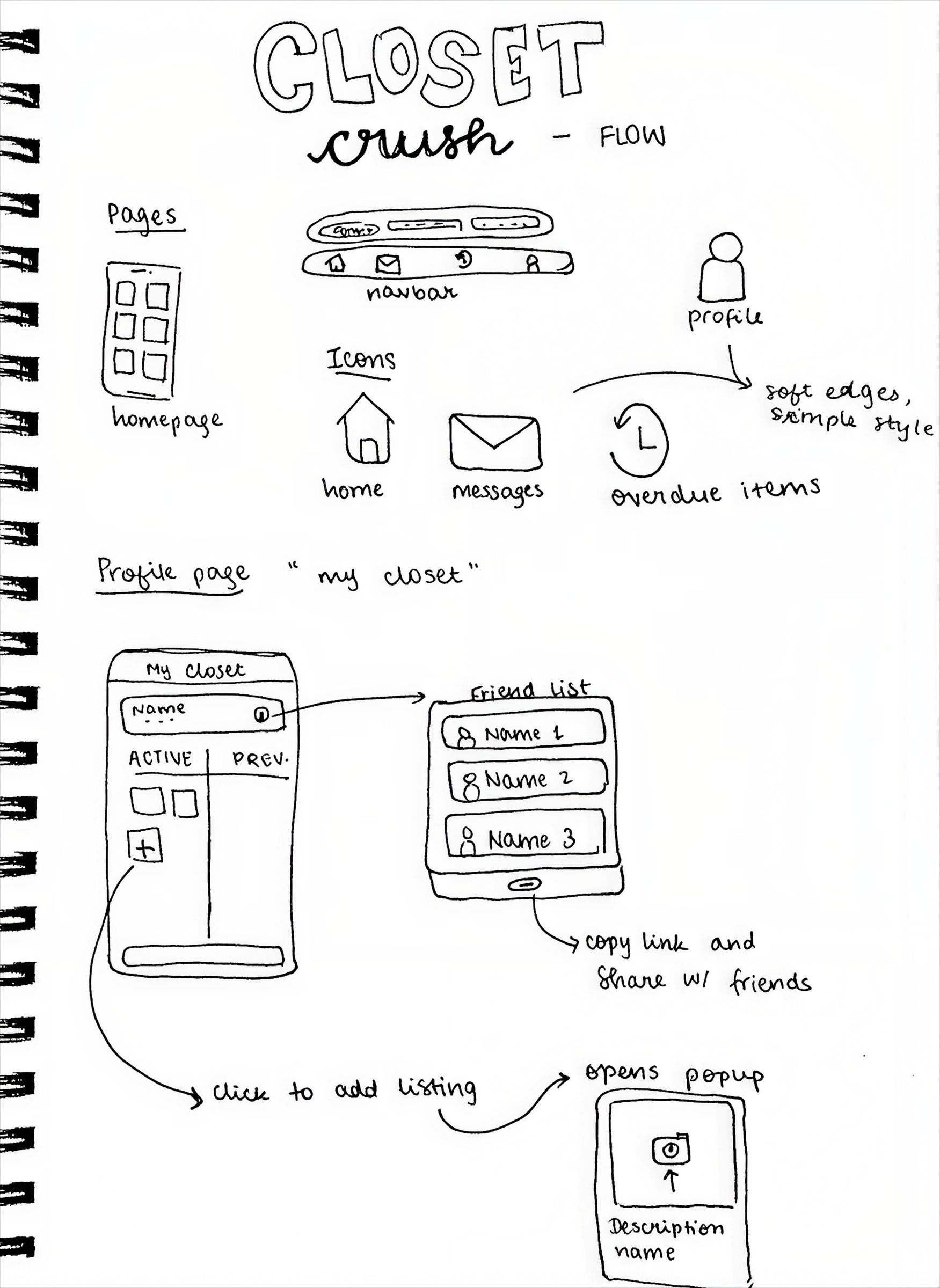
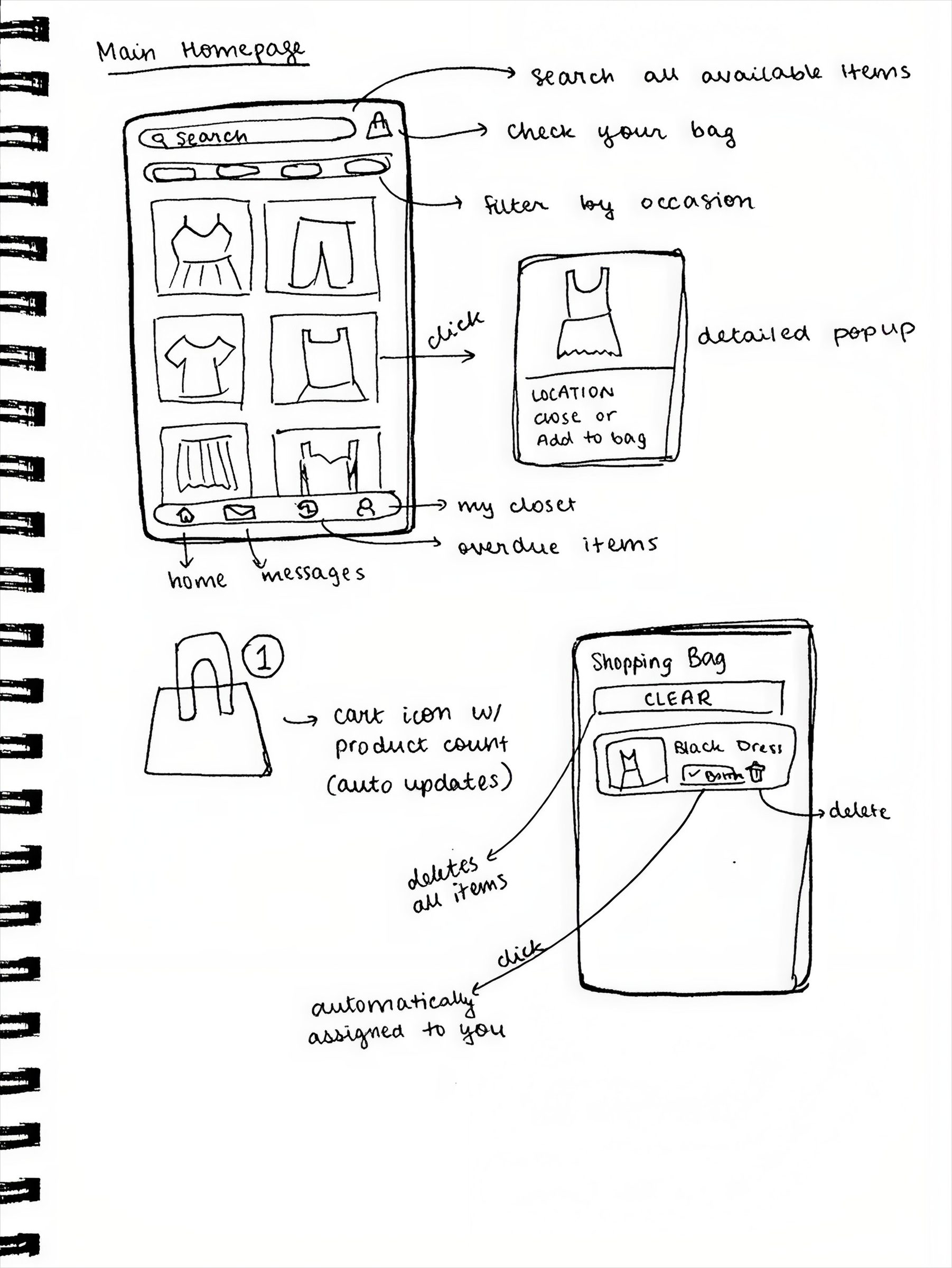
Closet Crush is a shared closet app for friend groups. You browse your friends' available clothing filtered by occasion, add items to a shopping bag, and tap "Borrow," which auto-suggests a hand-off time and generates a text to your friend. A "My Borrows" tab tracks active loans with return dates.
Design Decisions
- I deliberately designed the borrow flow to mirror online shopping. This meant zero learning curve as every tester understood the interaction immediately without instructions.
- Unlike marketplace apps, Closet Crush limits sharing to your friend group. Every item is tied to someone you know, which makes lending feel safe and low-stakes.
- Closet Crush suggests a time based on proximity and replaces the friction of a back-and-forth negotiation with a single confirmation tap.
- Filtering by occasion (casual, party, work, formal) matches how people actually decide what to wear.
Outcome and Next Steps
Closet Crush validated that the shopping-bag pattern transfers naturally to borrowing, and that friend-group trust removes the biggest hesitation around sharing clothes. Next steps include Stanford SSO integration for identity, a "style match" recommendation feature, and a pilot with various friend groups, plus partnering with the Office of Sustainability to track collective impact: clothes kept out of landfills, dollars saved, and emissions avoided.